Feeds:
Posts
Comments

Archive for January, 2012

First, an admission: I don’t think I’ve ever eaten Chili’s salsa, so I can’t tell you whether this Chili’s Copycat Salsa recipe that I found via Pinterest tastes like the real thing or not.

As a certified salsa junkie, I CAN tell you that I’ll be making this recipe again.

I love making fresh pico de gallo, but there’s only so much time a girl can dedicate to chopping onions, jalapenos and tomatoes into tiny little pieces. (Also, the inferiority of grocery store “tomatoes” has simply become unacceptable. When a potent blend of jalapenos, lime juice and cilantro doesn’t hide your insipidness, you’ve reached new lows as an ingredient.)

I can live with store-bought salsa, but it’s just so nondescript. Brands advertised as spicy are inevitably as plain as can be, and I wouldn’t be able to tell one brand from another in a blind taste test even if I had money riding on it.

The canned tomatoes in this recipe caught my eye, since they meant I wouldn’t be rewarding mediocrity in the produce section. I couldn’t actually find a small can of jalapenos, but I have to admit that maybe I didn’t try too hard after I spotted the big jar of sliced jalapenos. Toss and taste, unless you’re scared of heat.

All the ingredients blended together quickly in the tiny food-processor attachment that came with my immersion blender (I only made half the recipe).

I’ll warn you: The end product has what some might find an overwhelming cumin flavor. It’s what makes this concoction distinctive, but it might not be for everyone.

The heat from the jalapenos is subtle, kicking in a couple of seconds after you bite into a chip filled with salsa. Two days later, however, the salsa seems to be packing a little more heat, making me wonder how long I could safely store this mixture in the fridge to allow it to achieve maximum intensity.

Chili’s Copycat Salsa

Recipe from Six Sister’s Stuff

  • 2 14.5-oz. cans whole tomatoes, drained
  • 1 4-oz. can diced or whole jalapenos (not pickled)–about 4-5 jalapenos (or less if you don’t like a lot of spice)
  • 1/4 cup yellow onion, cut into quarters (you can also use dried minced onion)
  • 1 tsp. garlic salt
  • 1/2-1 tsp. salt
  • 1 tsp. cumin
  • 1/2 tsp. sugar
  • 1 tsp. lime juice

Puree all ingredients in a food processor until smooth.

Read Full Post »

Photo courtesy of Bakers Royale

Saturday, I applied a popular exercise mantra — “No pain, no gain” — to cooking.

The gain — delicious Mini Pommes Anna — was totally worth the pain.

I had purchased the entry-level OXO mandoline slicer several months ago, partly so I could make some version of pommes Anna, which is simply very thin slices of potato layered and baked with butter. (And if you’re one of those people who can make paper-thin slices of veggies with a knife, congratulations. You have mad knife skills. I do not.) I was in the middle of my final semester of grad school, however, so the mandoline has been resting in the gadget drawer.

The semester eventually drew to a close, and Pinterest pointed me to this intriguing recipe for smaller, individually sized versions of Pommes Anna, courtesy of Naomi at Bakers Royale. The mandoline finally made its debut.

And boy, was it angry.

Seriously, I underestimated the danger of the mandoline (and found out that just about everybody has a story about somebody taking their fingertip off with one). Having failed to keep the potato attached to the finger-protecting holder mechanism, I ran it across the blade by hand, which worked great right up until the moment I cut my thumb.

I immediately initiated Standard Operating Procedure for kitchen injuries:

  1. Don’t bleed in the food.
  2. Evaluate the injury.
  3. Wash the injury with soap and water.
  4. Wrap the injury with paper towel to try to stop the bleeding, or at least keep the blood out of the food.
  5. Soldier on. You’re not going to make more blood by starving yourself.

It was a minor cut, although it was a heck of a bleeder.

The potatoes were simply divine. The mandoline had cut them into sheer little circles that, when tossed with butter and layered with kosher salt and pepper in a muffin pan, baked up into a luxurious side dish. The husband commented more than once on these buttery and creamy little stacks of goodness.

And yes, there were only four ingredients: Yukon potatoes, butter, salt and pepper. I cut the recipe in half, so it made six. I figured two stacks per person was about right (they compress while baking, so each one ends up being about 1.5 inches high). We each ate a third stack, partly because they were so delectable and partly because they didn’t seem like the kind of food that reheats properly.

And one of us was making replacement blood, after all.

They were definitely a welcome change from mashed potatoes, which is what I usually serve with meat loaf (and more on that fabulous meat loaf later).

As for the mandoline, I think I should probably upgrade to the model with non-slip feet (seems like an upright model might be safer than one that “hooks” over a bowl). Also, a couple of friends pointed me toward Kevlar gloves made for use with mandolines, so those might be showing up in the gadget drawer, too. (Actually, when the first friend, Crafty Kristen, mentioned Kevlar gloves, I kind of thought she was joking — LOL Kevlar gloves for the clumsy cook, very funny. But no. They are real. And possibly a necessity.)

Read Full Post »

blinc

My Birchbox subscription has taught me a lot about the cosmetics industry.

For example, a lot of women will apparently pay $18 an ounce for a “molecular mist” purported to do everything from keeping skin hydrated to protecting it from “ionizing radiation” emitted from the sun and cellphones.

I thought it smelled like that one perfume that every lady over 75 is contractually obligated to wear, so I tossed it.

Come at me, ionizing radiation.

I’ve also learned that oil-based moisturizers, even those containing lavender-scented unicorn tears of happiness, make my eyes swell, which I guess puffs the tiny wrinkles right out.

Overall, the Birchbox experiment has been loads of fun, especially when the $10-a-month box of samples includes makeup. My first box held a full-size container of Laura Geller Baked Blush N’ Brighten blusher/highlighter, and this month I received stila’s Smudge Stick liner in Lionfish (that’s a coppery brown for those of you unfamiliar with hilarious names for cosmetics shades).

The Birchbox item that’s changed my makeup routine, however, is blinc mascara (and no, the cosmetics industry absolutely CANNOT afford to purchase uppercase letters for their company names).

I had been having trouble with mascara for a while. L’Oreal either stopped making or stopped distributing my favorite mascara, FeatherLash, a few years ago, and while other varieties were certainly waterproof, they weren’t anywhere NEAR smudgeproof or flakeproof. By midday, especially in the summer, I was almost guaranteed to have light black smudges under my eyes. Of course, I couldn’t remove waterproof smudges without removing any foundation or concealer that I might be wearing, so sometimes I would just skip mascara in the morning, especially if I was planning on wearing makeup on an evening outing and didn’t want to start over.

The blinc sample promised to form smudgeproof tubes of color around my lashes instead of painting them. It also pointed out a DUH factoid about waterproof mascara: Your skin’s oil makes it smudge because it’s waterproof, not oilproof (oil is a central ingredient in many of the very products that REMOVE waterproof mascara, after all).

So how DO you remove mascara that’s waterproof AND oilproof? It turns out that blinc is actually water-resistant rather than waterproof. Sweat, rain and tears shouldn’t affect it, however, since it requires a combination of water AND pressure for removal. I’ve found that a few concentrated splashes of warm water, followed by gentle tugging with my fingertips, takes it right off. This method actually results in fewer lashes getting tugged out, too.

So, yeah, I totally spent $25 on a tube of mascara for the first time ever. Wonders never cease.

Read Full Post »

Since I was a little kid, my go-to anxiety dream involved snakes. In this recurring dream, I would step outside my house to find a yard filled with snakes, and I would have to walk carefully to avoid them. No matter what house I walked out of, the yard itself was inevitably the yard from our home in Collins, Miss., where I went to elementary school.

This was never what I would call a nightmare, since Dream Me would just sort of sigh and start picking her way through snakes, but it always occurred during stressful times.

After Hurricane Katrina flooded my home, my hometown and a boggling number of other places I loved, my subconscious traded snakes for water as an expression of anxiety.

Again, these dreams aren’t nightmares. The problems encountered — usually water rising where it shouldn’t be rising, or me somehow falling into a deep body of water — aren’t so much scary as they are irritating.

During one particularly active dream sequence a couple of weeks ago, I found myself seated at a table that was really part of a boat that plunged over the side of the dock when the driver gunned the engine (I never said my dreams obeyed the laws of mechanics or physics). I swam back up to the dock and climbed into a dockside restaurant, which immediately began to turn sideways since it turned out to be a huge boat that was rolling over. As I kicked my way out of a window into the water, Dream Me really couldn’t believe she had to swim all the way up from the bottom of the ocean AGAIN.

I mean COME ON.

I totally get it. My subconscious gets overwhelmed with anxiety and takes it out on my dreams. It takes what I’m apparently scared of deep down and releases it at 2 a.m.

My everyday way to cope with anxiety is to constantly analyze how to fix problems. I’m on to Plan C before most people even realize that Plan A is done for and Plan B is just ludicrous.

It’s the same in my dreams. Instead of waking up in a cold sweat when the boat plunges beneath the surface of the water, Dream Me is concentrating on swimming horizontally before trying to head up to the surface in case the sinking boat creates a whirlpool (apparently my subconscious thinks it just might, no matter what the Mythbusters say).

Healthy? You’ll have to ask my theoretical psychotherapist. But it makes sense to me that working through dream anxieties rather than simply having them scare you half out of your pajamas has to be pretty good self-therapy.

Read Full Post »

Photo courtesy of Budget Bytes

That was fast.

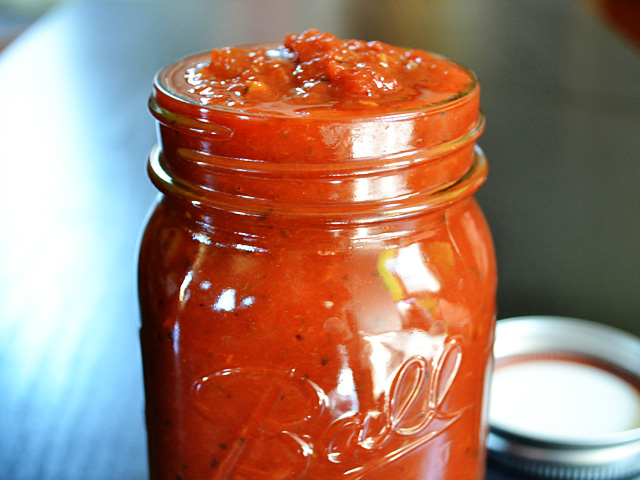
Just a week after I took up the pursuit of an easy homemade alternative to store-bought pasta sauce, I think I’ve found my go-to recipe.

Over at Budget Bytes, Beth posted a recipe for a slow cooker marinara sauce in November (gotta give kudos to Pinterest for helping me find it). She noted that the long, slow cooking process (eight hours on low) carmelizes the sugar in the crushed tomatoes. Carmelization gives the sauce a depth of flavor that jarred pasta sauce simply cannot replicate. It’s got the hint of sweetness that a good tomato-based sauce should have without the artificial, overpoweringly syrupy sweetness offered by most manufactured sauces these days.

It was a cinch to make, too. I diced an onion and a couple of cloves of garlic the previous night and dumped everything into the 4-quart slow cooker crock the next morning. The husband texted me at lunch to let me know that it smelled delicious.

I browned a little ground beef to make a simple meat sauce and served it over two small servings of penne. (And while I’m talking about pasta, let me recommend that you cook half the recommended serving size listed on the box. The suggested serving sizes are obviously calculated to make you buy more pasta, not maintain a healthy weight.)

I might add some crushed red pepper next time for a more piquant sauce, but other than that, I’m very satisfied with this recipe. Like other tomato-based sauces, it’s going to freeze well, meaning that I’ll now have ready-to-serve pasta sauce in the freezer instead of the pantry.  It’s going to be versatile, too: Besides meat sauce, it’s going to be a great topping for ravioli and a good dipping sauce for the husband’s homemade calzones.

Next goal: A go-to, not-too-salty soup recipe to keep in the freezer.

Read Full Post »

How weird to be in the middle of a food trend and not realize it.

I’ve been trying to reduce the amount of processed food in my family’s diet for the past few years. I was unemployed for a few months when we first moved to Huntsville, so I started cooking a lot to try to save money and fill time. And not Hamburger Helper-type cooking, either. I’m talking from-scratch cooking, as in grate your own cheese (melts so much better than pre-shredded) and making your own meatloaf spice mixture (because have you READ the ingredients on those little flavoring packets?). The salad spinner became a permanent resident in the fridge, always filled with fresh (and local, when available) greens.

We didn’t give up EVERY processed food, mind you. There may or may not be a multipack of frozen pizzas from Costco in my freezer right now. The peanut butter that the husband eats every day is incredibly hydrogenated (I’d go bankrupt trying to feed him the real stuff). I don’t make my own mayonnaise, although I should make my own salad dressing.

So I’m not claiming that we’re dietary saints. But we’ve both maintained our weight for the past five years despite some substantial lapses in workouts, and we’ve put a significant dent in the number of colds and other odd viruses that haunt so many households. Coincidence? Maybe, but I’ll take it.

We find ourselves in the middle of the Real Food Movement. Come on in. It’s delicious.

I rescued a copy of The End of Overeating: Taking Control of the Insatiable American Appetite from my mom’s Goodwill box a few months ago and just got around to reading it. Author David A. Kessler explores, among other things, how utterly processed the average American diet is. The food industry exists to sell us cheaply manufactured goods that make us want to eat more, no matter how much sugar, fat and salt it takes to get us hooked.

I spotted a title at Barnes & Noble this weekend that actually distracted me from the Harry Potter table: Skinny Chicks Eat Real Food: Kick Your Fake Food Habit, Kickstart Your Weight Loss. Author Christine Avanti explores factory food addiction and how her move to fresh, real foods helped her lose weight and, more importantly, maintain her weight. I didn’t pick up the book because, I told myself, I’m not trying to lose weight OR fill up my bookshelves right now, but I’m very curious to read Avanti’s findings.

The thing about (who knew?) being part of the Real Food Movement for the past couple of years? I can now often taste the difference between processed foods and real foods. For example, I can taste the excessive sugar in jars of spaghetti sauce — there’s only one variety I can really stand to eat now, and the husband’s not fond of it. The flavor of salt in canned soup is getting overwhelming — heck, I can taste salt in one variety of CHEESE now, prompting me to replace it with another.

So, as anticlimactic as it may be, my New Year’s Resolution is to keep following the Real Food path. I’ll also be changing up my exercise routine (more on that later), but mostly I’ll continue figuring out how to feed the husband and myself quality, delicious foods and get further away from the “better living through chemistry” theme that has overtaken our food industry for the past few decades.

To that end, I’m afraid the pantry is about to lose two longstanding residents. You’ve been handy, jarred spaghetti sauce and canned soup, but I can taste your additives, and I can make you better without them.

Read Full Post »